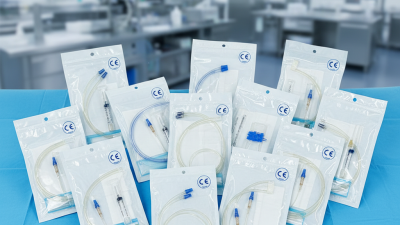
Using a Central Venous Catheter, or CVC, is pretty much a critical part of medical treatment for lots of patients. These little devices are key when it comes to delivering meds, fluids, or nutrients straight into the bloodstream — kind of a lifeline in many cases. Interestingly, according to the Healthcare Cost and Utilization Project (HCUP), around 5 million CVCs are inserted every year just in the U.S. That really shows how important they are in all sorts of healthcare settings — whether it’s in intensive care or for long-term treatments.
What’s great about CVCs is that they not only help get the job done efficiently but also make things a bit more comfortable for patients. Instead of getting poked multiple times with needles, a single CVC can cut down on pain and reduce some of the stress patients often feel. But, and here’s the thing, they’re not perfect — complications can pop up. Some reports suggest that about 15% of Cvc Insertions can lead to infections, which is definitely something healthcare providers need to be mindful of. It really highlights the importance of proper care and strict protocols to keep patients safe.
All in all, Central Venous Catheters are a really valuable tool in modern medicine. They bring a lot of benefits but come with their own set of challenges, so it’s crucial for healthcare pros to stay vigilant. Understanding both the good and the risks helps us make sure patients get the best and safest care possible.

Definition and Functions of Central Venous Catheter
Central venous catheters (CVC) play a crucial role in modern medical treatment. These devices provide a pathway to deliver medications, fluids, and blood products directly into the central venous system. According to the Centers for Disease Control and Prevention (CDC), around 15 million Central Line placements occur yearly in the U.S. alone. This highlights their significance in patient care, especially for those requiring intensive therapies.
A CVC is especially beneficial for patients needing long-term intravenous access. It allows for the administration of large volumes of fluid, which is essential in critical care settings. Research shows that nearly 70% of patients in intensive care units (ICUs) have a central venous catheter placed. Additionally, a 2018 study indicated that the use of CVCs can reduce the number of venipunctures required for patients. However, complications such as infections and thrombosis remain concerns. The CDC reported that the incidence of central line-associated bloodstream infections (CLABSIs) is about 0.2 to 1.3 infections per 1,000 catheter days.
Despite their advantages, the reliance on CVCs reflects a need for careful monitoring and oversight. Some healthcare providers may overlook infection prevention protocols, leading to potentially harmful outcomes. A consistent review of practices is essential. The need for refined techniques and ongoing education cannot be overstated. CVCs remain a vital tool, but the complexities involved highlight areas for improvement within healthcare systems.
Importance of Central Venous Catheters in Medical Treatment
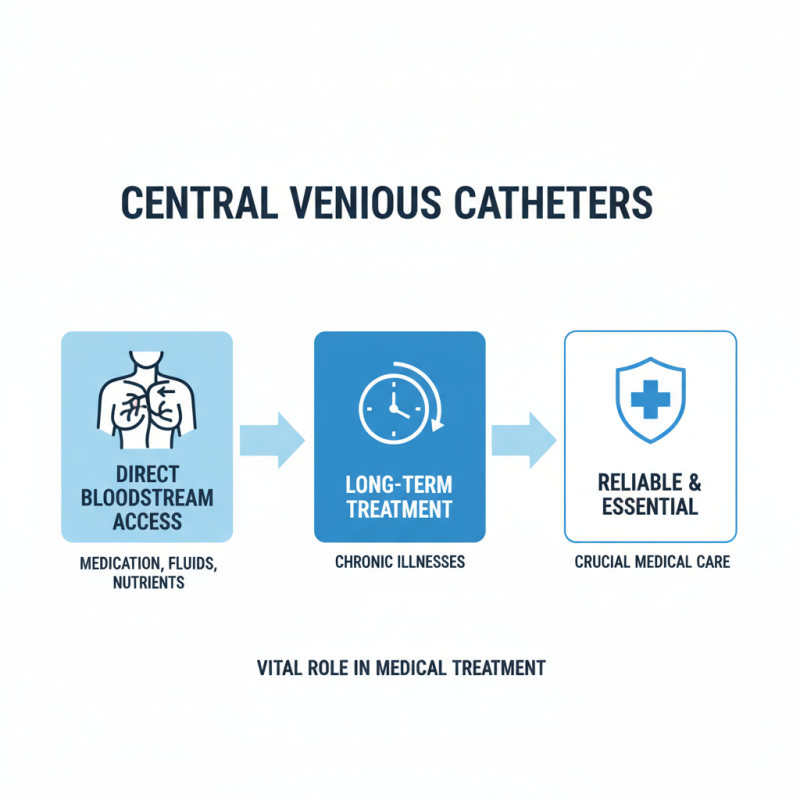
This chart illustrates the various functions of Central Venous Catheters (CVCs) and their importance in medical treatment based on usage statistics.
Types of Central Venous Catheters Used in Medical Practice
Central venous catheters (CVCs) are crucial in various medical treatments. They provide access to the central venous system, facilitating drug administration, fluid replacement, and blood sampling. This access is vital for patients requiring long-term treatment. There are several types of CVCs used in hospitals and clinics.
One common type is the tunneled central venous catheter. This catheter is inserted under the skin before reaching the vein. It’s durable and often used for long-term therapies.
Another type is the non-tunneled central venous catheter. This option is for short-term use, placed directly into the vein. It offers quick access for urgent treatments.
Peripherally inserted central catheters (PICCs) are also popular. They are inserted into a peripheral vein and threaded to the central circulation. This allows for extended use without repeated needle sticks. Each type has its advantages. Yet, there are risks. Infections and thrombotic complications can occur. Careful monitoring is essential. Choosing the right CVC requires thorough consideration and ongoing evaluation.
Indications for Central Venous Catheter Placement
A Central Venous Catheter (CVC) is essential in various medical treatments. It allows for long-term access to a patient's bloodstream. This is especially crucial for patients needing frequent blood draws, intravenous medications, or nutrition. Sometimes, finding a suitable vein can be a challenge. A CVC bypasses these difficulties, providing a reliable access point.
Indications for CVC placement include multimodal therapy, significant fluid management, and chemotherapy administration. Patients undergoing intensive treatment often require constant monitoring and medication delivery. A CVC enables healthcare providers to administer therapies safely. Certain conditions, like sepsis or trauma, also necessitate rapid fluid resuscitation. A CVC can help stabilize such patients quickly.
While beneficial, CVCs are not without risks. Infections or thrombosis can occur. Proper placement and maintenance are vital. Healthcare teams need to remain vigilant. Reflecting on the balance between risks and benefits is crucial in each case. The importance of a CVC truly lies in its ability to support complicated medical needs while navigating potential complications.
Why is Central Venous Catheter Important in Medical Treatment? - Indications for Central Venous Catheter Placement
| Indication | Description | Alternative |
| Administration of Medications | Allows for rapid administration of irritant medications and blood products. | Peripheral IV Catheter |
| Total Parenteral Nutrition (TPN) | Essential for patients who cannot eat or absorb nutrients via the gastrointestinal tract. | Feeding Tube |
| Hemodialysis | Used for patients with renal failure requiring dialysis. | Arteriovenous Fistula |
| Frequent Blood Sampling | Facilitates repeated blood draws without multiple needle sticks. | Peripheral Venipuncture |
| Management of Shock | Provides access for fluids, medications, and monitoring in critical care settings. | Central Arterial Line |
Benefits of Using Central Venous Catheters in Patient Care
Central Venous Catheters (CVCs) play a vital role in medical treatment. They provide a reliable way to access the bloodstream. This access is crucial for administering medication, fluids, and nutrients. CVCs allow for long-term treatment, which is essential for patients with chronic illnesses.
Using CVCs offers several benefits. They facilitate frequent blood draws without multiple needle sticks. This reduces discomfort for patients. Additionally, CVCs can deliver large volumes of fluids quickly. This is essential in emergencies when time is critical. A Central Venous Catheter 7f can handle such demands effectively.
Here are some tips for care providers. Always ensure proper placement of the catheter. This can prevent complications like infection. Regularly monitor the insertion site for signs of irritation or infection. Educate patients about their CVC. They may have concerns regarding its appearance or discomfort. Doing so can ease their anxiety and improve cooperation. Lastly, reflect on your techniques and seek feedback from peers. Continuous improvement is key to successful patient care.
Risks and Complications Associated with Central Venous Catheters
Central venous catheters (CVCs) are vital in modern medical treatment. However, their use is not without risks and complications. According to the Centers for Disease Control and Prevention (CDC), infections occur in about 15% of CVC placements. Catheter-related bloodstream infections can lead to serious outcomes. The presence of a CVC allows pathogens to enter the bloodstream, posing a significant threat to patient safety.
Another critical issue is thrombosis. Studies reveal that about 30% of patients may experience catheter-related thrombosis, leading to venous occlusion or pulmonary embolism. This is particularly concerning in patients with pre-existing conditions. The difficulty in recognizing these complications adds to the challenge. Patients may not show symptoms until severe damage has occurred, making early intervention difficult.
Despite their usefulness, we must reflect on the implications of CVC use. The incidence of complications emphasizes the need for careful monitoring and management. Many healthcare providers may overlook routine assessment practices. Striking a balance between benefit and risk is essential. Ongoing training and awareness can help reduce these complications and improve overall patient outcomes.
Management and Maintenance of Central Venous Catheters
Central Venous Catheters (CVCs) play a crucial role in modern medical treatment. They provide access to a patient’s central venous system. Proper management and maintenance of these catheters are vital for preventing complications. According to the Centers for Disease Control and Prevention (CDC), the risk of catheter-related bloodstream infections (CRBSIs) can be reduced by up to 66% with consistent maintenance practices.
Regular cleaning and dressing changes are essential. The CDC recommends that healthcare providers use sterile techniques during these procedures. In an observational study, it was found that nearly 30% of hospital-acquired infections stemmed from improper catheter maintenance. This highlights the need for diligent practices. Yet, many facilities struggle with compliance, indicating room for improvement in training and protocols.
Monitoring for signs of infection is equally important. Indicators like redness, swelling, or unusual discharge can alert clinicians to potential issues. A study in the Journal of Hospital Medicine stated that timely interventions could lower infection rates significantly. Awareness and adherence to guidelines can enhance patient outcomes. Central Venous Catheter care requires a committed approach, focusing on detail and best practices to ensure patient safety.
Alternatives to Central Venous Catheters in Medical Treatment
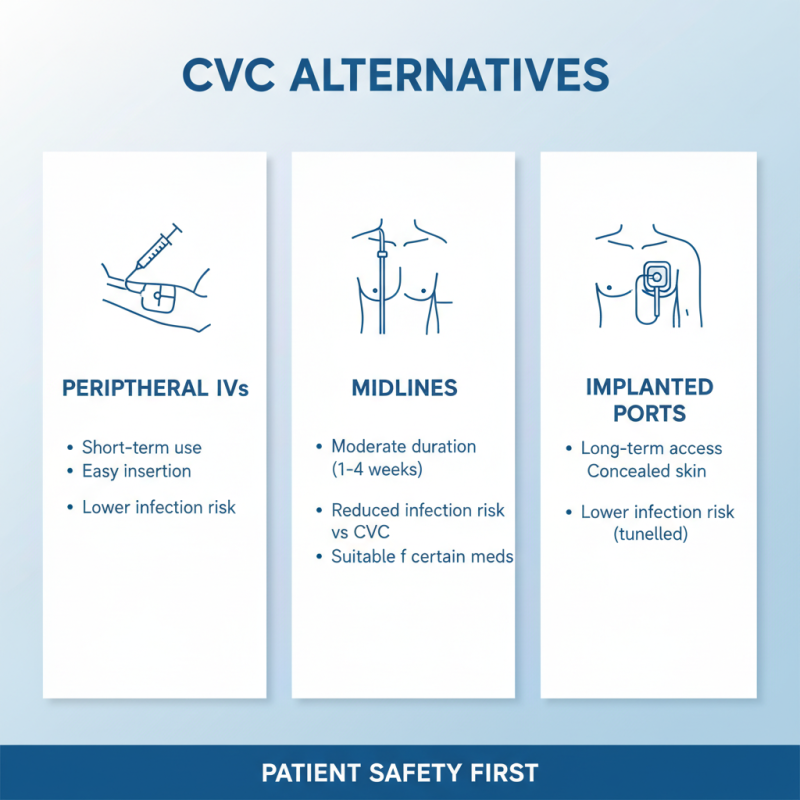
Alternatives to Central Venous Catheters in medical treatment are essential for patient safety. While Central Venous Catheters (CVCs) can provide quick access to the bloodstream, they also come with risks. Issues like infections or thrombosis may arise. Therefore, exploring alternatives is crucial.
Peripheral intravenous (PIV) lines serve as a common substitute. They are easier to place and carry fewer risks. However, PIV lines may not be suitable for long-term use. Another option is intraosseous access. This method involves inserting a needle into the bone marrow. It provides rapid access during emergencies when peripheral routes fail.
Ultrasound-guided techniques have also improved access methods. However, they require skilled practitioners. Mistakes can happen in placement, leading to complications. Options like the Central Venous Catheter 5f can be vital in specific instances, yet alternatives should always be considered. Balancing benefits with risks is key for effective medical treatment.
Essential Insights for Choosing the Right Ureteral Catheter for Effective Urinary Management
When considering the essential insights for choosing the right ureteral catheter for effective urinary management, it’s important to understand the role of these devices in clinical settings. A ureteral catheter is a long, thin, flexible tube designed to be inserted through the bladder and into the ureter, which connects the kidney to the bladder. Its primary functions include draining urine from the kidney, bypassing obstructions, and serving as a conduit for diagnostic procedures and instrumentation. According to industry reports, ureteral catheters can significantly reduce complications related to urinary obstruction and enhance patient comfort, with studies indicating that proper catheter selection can improve overall treatment outcomes.
Additionally, selecting the appropriate ureteral catheter involves considering various factors, including material composition, diameter, and length. The type of catheter can affect the ease of insertion and the risk of complications such as infection or damage to the urinary tract. For instance, silicone catheters are often preferred for their biocompatibility and reduced likelihood of encrustation. A survey from the Urological Association highlights that 82% of healthcare professionals prioritize catheter flexibility and biocompatibility when making their selection. Ultimately, informed decisions regarding ureteral catheterization can lead to better urinary management, lower hospitalization rates, and an overall improvement in patient care.
FAQS
: This product offers enhanced features for convenience. Users report improved efficiency and satisfaction during use.
Regular cleaning is essential. Avoid harsh chemicals. Inspect parts often to ensure everything is functioning properly.
Yes, a warranty covers manufacturing defects. Check the terms for duration and specific conditions carefully.
Contact customer support for assistance. Provide details about the issue for quicker resolution. Patience is appreciated.
Follow the user manual guidelines closely. Avoid improper use to prevent accidents or damage. Safety first, always.
Sharing is possible, but be cautious. Each user should understand proper handling and usage to avoid mistakes.
Some struggle with setup initially. Others may find it hard to adapt to new features. Learning curves exist.
It's friendly for newbies but may require some learning. Familiarity with basic functions is essential for best results.
Yes, alternatives exist in the market. Evaluate features and reviews before making a decision. Choices may vary significantly.
User feedback is valuable. Share your experiences via surveys or customer service channels. Constructive criticism helps improve future versions.
Conclusion
A Central Venous Catheter (CVC) is a critical device used in medical treatment, facilitating various functions such as medication administration, fluid management, and hemodynamic monitoring. Various types of CVCs are employed in clinical settings, each tailored to specific needs, and their placement is indicated in scenarios like long-term medication delivery or when peripheral access is challenging. The benefits of using CVCs include enhanced patient care, improved treatment efficiency, and the ability to access central venous circulation for diagnostic purposes.
However, the use of Central Venous Catheters also comes with inherent risks and complications, such as infection and thrombosis, necessitating vigilant management and maintenance protocols. In some cases, alternatives to CVC placement may be considered, depending on patient-specific factors and treatment goals. Overall, the effective utilization of Central Venous Catheters is paramount in modern healthcare, greatly impacting patient outcomes and therapeutic success.