Leave Your Message
0%

Lately, there's been a noticeable increase in the demand for high-quality Interventional Guiding Catheters around the world. Dr. Emily Chen, who’s pretty well-known in vascular interventions at MedTech Innovations, points out that picking the right catheter is actually a big deal when it comes to successful procedures. Her take really highlights just how important quality is when dealing with this kind of life-saving equipment.

These Interventional Guiding Catheters are essential tools, especially in minimally invasive surgeries, and they can seriously influence patient outcomes. Thanks to tech advances, these catheters are getting more specialized than ever. We’re seeing a variety of materials and designs popping up, but honestly, selecting the best one can feel a bit overwhelming. It’s a lot to sift through — kinda like looking for a needle in a haystack.

When it comes down to it, you really can’t compromise on reliability and performance with these catheters. People tend to focus on the specs, but Dr. Chen reminds us that real-world performance matters just as much — if not more. She notes, “Not all catheters perform the same under pressure.” That’s a good point, and it means anyone shopping for these needs to be careful and do their homework. Choosing the right tool can make a big difference in the OR and, ultimately, patient outcomes.

2026 Best Interventional Guiding Catheters for Global Buyers?

Overview of Interventional Guiding Catheters

Interventional guiding catheters play a vital role in various medical procedures, especially in Interventional Urology. These devices facilitate accurate access to targeted areas within the body. When considering the best options, understanding their designs, materials, and performance is essential. Many catheters come with unique features that enhance maneuverability and reduce procedural complications.

The materials used in crafting these catheters significantly impact their functionality. High-quality polymers provide flexibility and durability. However, finding the right balance between stiffness and flexibility can be challenging. Some studies suggest that overly rigid catheters might impede navigation through complex anatomy. This issue raises a crucial point about the need for continuous innovation and development in this field.

Guiding catheters must also consider patient comfort. Designs that prioritize ergonomics can help improve the experience for both patients and medical staff. Surprisingly, some catheter designs may not adequately address these factors. Thus, reviewing user feedback and clinical trials is essential to identify potential shortcomings. Overall, advancements in interventional guiding catheters are promising, yet there's clearly room for improvement and reflection in their design and application.

2026 Best Interventional Guiding Catheters for Global Buyers

Catheter Type Length (cm) Diameter (Fr) Material Intended Use
Curved Guiding Catheter 90 6 Polyurethane Cardiovascular Procedures
Straight Guiding Catheter 100 7 Polyethylene Neurovascular Procedures
Multipurpose Catheter 120 8 Nylon Various Interventions
Jazz Catheter 80 5 Teflon Pediatric Procedures
Shuttle Catheter 110 9 Silicone Endovascular Procedures

Key Features to Consider When Choosing Guiding Catheters

When selecting interventional guiding catheters, several key features should be prioritized. The material of the catheter plays a crucial role in its functionality. A flexible catheter can navigate complex anatomical pathways. In contrast, a stiffer option may offer better control during insertion. Evaluating the balance between flexibility and support is essential for optimal performance.

Diameter and length are significant factors too. A wider diameter provides increased flow but may limit access. Catheters come in various lengths, impacting their maneuverability in different clinical scenarios. Each procedure may demand a specific size, making it essential to match catheter dimensions to the intended use.

The design of the catheter tip also matters. A tapered tip can ease navigation through tight vessels. However, this design may not always provide as much torque. Choosing a catheter with the right tip design can enhance procedural outcomes. Evaluating your needs thoroughly helps refine choices, ensuring the selected catheter works seamlessly with your Interventional Guidewire. Each feature may add value, but alignment with procedural goals is what counts most.

Top Brands in the Market for Interventional Guiding Catheters

The market for interventional guiding catheters is rapidly evolving. With new technologies and advancements, various brands are stepping up their game. Quality and reliability are key factors for healthcare providers when selecting these devices. A guiding catheter's performance can significantly impact procedural outcomes. A good balance between flexibility and support is essential.

Many leading brands are investing in research to enhance catheter design. They focus on minimizing trauma to vessels while optimizing access. Some products offer excellent trackability and a wide range of sizes. However, not all catheters perform equally in diverse clinical settings. Evaluating user feedback is crucial for making informed choices. The learning curve with some devices may lead to complications if not approached carefully.

Keeping up with trends in materials is vital. Innovations such as hydrophilic coatings and advanced manufacturing techniques are improving usability. Yet, some users report experiencing issues in complex cases. Understanding the limitations of each product is important. The demand for high-quality catheters will continue to grow, pushing brands to refine their offerings.

Comparative Analysis of 2026 Leading Guiding Catheters

2026 Best Interventional Guiding Catheters for Global Buyers?

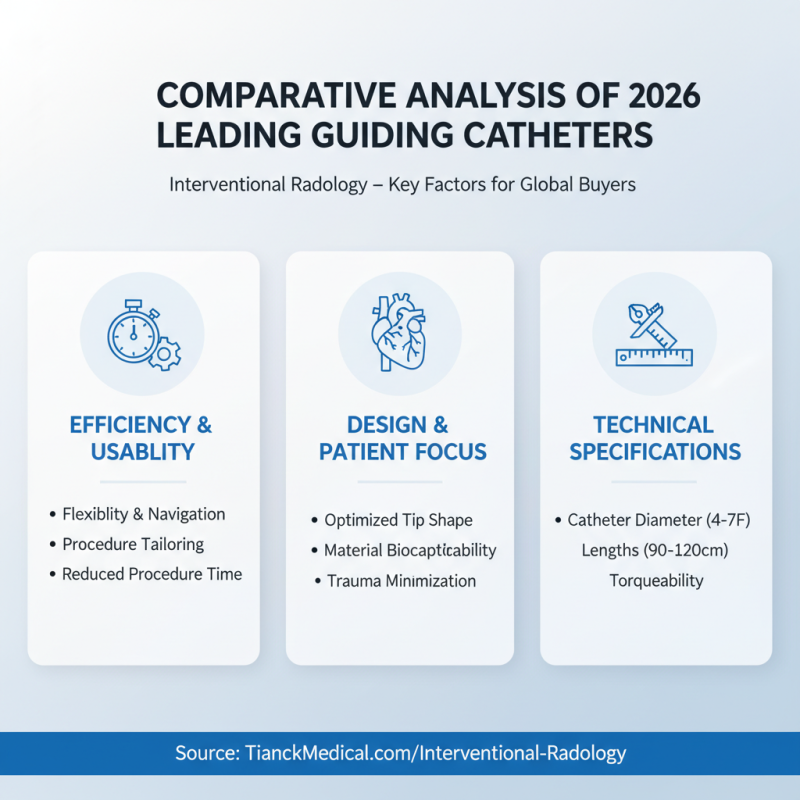
The landscape of guiding catheters in Interventional Radiology is evolving. It’s crucial for global buyers to assess their options carefully. In 2026, several catheters stand out based on efficiency, usability, and design. Many practitioners prioritize flexibility and ease of navigation through complex vascular structures. Catheter diameter and length variations offer tailored approaches for diverse procedures.

User feedback indicates a need for improved tactile feedback during procedures. Some guiding catheters achieve this while others fall short. Consider how design influences performance in real-world settings. Issues like friction can lead to less than optimal experiences.

Safety is another critical aspect. Not all models guarantee protection against complications. When selecting a guiding catheter, reviewing clinical studies will enhance confidence in decision-making. Flaws in design can affect durability and reliability. Understanding these details is essential for informed choices in interventional radiology.

User Reviews and Feedback on Popular Guiding Catheters

2026 Best Interventional Guiding Catheters for Global Buyers?

Interventional guiding catheters play a crucial role in various medical procedures. User reviews often highlight their importance in enhancing procedural accuracy and patient safety. Many healthcare professionals share positive experiences, emphasizing ease of use and reliability. However, some feedback points out challenges related to flexibility and maneuverability in complex cases. These insights are invaluable for prospective buyers.

Reviews from hospitals often detail specific issues related to material quality and design. Users appreciate catheters that provide consistent performance across multiple interventions. Yet, some report frustrations with kinking or difficulty in navigating tortuous anatomy. This feedback encourages manufacturers to innovate, ensuring that new designs meet clinical needs effectively. Continuous reflection on user experiences fosters improvements in catheter development.

Moreover, the diversity in user feedback underscores the necessity for careful selection. Not every catheter will suit every procedure or practitioner. Understanding the strengths and weaknesses based on real-world use helps buyers make informed decisions. Ultimately, the conversation around guiding catheters remains dynamic, with ongoing dialogue between users and manufacturers driving enhancements.

Global Trends in the Development of Guiding Catheters

The development of guiding catheters has witnessed a significant transformation in recent years. As the global healthcare landscape evolves, manufacturers are focusing on advancing technology. Innovations aim to enhance patient safety and procedural success. These enhancements often involve improved materials that provide greater flexibility and durability.

Moreover, the implementation of advanced imaging techniques is reshaping the way interventional procedures are performed. Enhanced visualization allows for more precise catheter placement. However, challenges persist in standardizing these technologies across different regions. Variability in regulations and adoption rates can hinder progress.

Trends also indicate a growing emphasis on user-friendly designs. Catheters must be easier to manipulate, especially in complex cases. Addressing ergonomic concerns is crucial. The feedback from medical professionals is invaluable in this regard. Continuous dialogue can help bridge the gap between innovation and practical application. Adapting to the needs of different healthcare environments remains a complex task.

Future Innovations in Interventional Guiding Catheter Technology

Innovations in interventional guiding catheters are pivotal in advancing Interventional Cardiology. Emerging technologies focus on enhancing precision and safety. One significant trend is the development of catheters that utilize advanced imaging capabilities. These innovations incorporate real-time visualization. This allows cardiologists to navigate complex vascular structures more effectively.

Additionally, materials used in catheter design are evolving. Novel compounds offer increased flexibility and durability. Such improvements reduce the risk of complications during procedures. With lighter materials, these catheters provide better handling and maneuverability. A shift towards user-friendly interfaces is also noticeable. Caregivers appreciate streamlined designs that facilitate better workflow.

Despite these advancements, challenges remain. There exists a need for rigorous testing to ensure reliability. Variability in patient anatomy adds complexity to catheter design. Feedback from practitioners is essential for ongoing improvements. The journey toward optimal interventional guiding catheters is ongoing. Each innovation is a step closer to enhancing patient outcomes in interventional cardiology.

Essential Insights into Angiography Catheters: Features, Applications, and Selection Guide

Angiography catheters play a crucial role in modern medical imaging, particularly within the fields of cardiology, vascular surgery, and neurovascular interventions. These specialized devices are designed to navigate the complex network of blood vessels, allowing clinicians to inject contrast agents directly into targeted areas. This process enhances the visibility of vascular structures, rendering them more discernible during imaging examinations. The ability to produce clear and detailed images is vital for accurate diagnosis and developing effective treatment plans.

When selecting angiography catheters, various features come into play. Catheters are available in various sizes, shapes, and materials, each suited for specific applications. For instance, longer and more flexible catheters may be required for navigating peripheral vessels, while shorter, stiffer varieties are often used in coronary interventions. The selection of the appropriate catheter is paramount, as it can significantly affect the ease of insertion, maneuverability, and the quality of the resulting images. As such, understanding the intended application and the specific anatomical challenges posed by the procedure is essential in choosing the right angiography catheter.

Applications of angiography catheters extend beyond mere imaging; they are integral to interventional procedures as well. For instance, they can facilitate the delivery of therapeutic agents or devices directly to the site of vascular anomalies. With technological advancements, many catheters now incorporate features that enhance their functionality, such as hemostatic valves or integrated imaging capabilities. As the field of vascular medicine continues to evolve, the importance of selecting the right angiography catheter will only grow, emphasizing the need for ongoing education and familiarity with the latest innovations.

FAQS

: What are the key features to consider when choosing guiding catheters?

: Important features include material, diameter, length, and tip design. Each impacts catheter performance in procedures.

How does the material of a catheter affect its use?

Flexible materials navigate complex paths, while stiffer options provide better control during insertion.

Why is diameter important when selecting a catheter?

A wider diameter improves flow but may limit access. It's crucial to match the size to the procedure required.

What role does catheter length play in its effectiveness?

Different lengths affect maneuverability. Each clinical scenario may require a specific size for optimal performance.

Why is tip design critical for guiding catheters?

A tapered tip aids navigation through tight vessels, but may sacrifice some torque. Balance is necessary for best outcomes.

What innovations are happening in guiding catheter technology?

Emerging technologies include advanced imaging capabilities for better visualization and navigation through complex vasculature.

How are materials evolving in catheter design?

New compounds enhance flexibility and durability, contributing to reduced complications during procedures.

What challenges still exist in guiding catheter technology?

There is a need for rigorous testing and feedback to navigate the variability in patient anatomy effectively.

What is the significance of user-friendly interfaces in catheter design?

Streamlined designs help caregivers improve workflows and enhance procedural efficiency, which is vital for patient care.

How are innovations impacting patient outcomes in interventional cardiology?

Each technological step aims to improve safety and precision, ultimately enhancing the quality of care for patients.

Conclusion

The article "2026 Best Interventional Guiding Catheters for Global Buyers" provides a comprehensive overview of interventional guiding catheters, highlighting their critical roles in various medical procedures. It delves into key features that users should consider when selecting guiding catheters, ensuring they meet the specific needs of different interventions.

The piece also presents a comparative analysis of the leading guiding catheters available in 2026, drawing on user reviews and feedback to assess their performance and reliability. Additionally, it explores global trends in the development of these devices and discusses potential future innovations in interventional guiding catheter technology. This forward-looking perspective aims to equip healthcare professionals with the knowledge necessary to make informed choices in an evolving medical landscape.

Liam

Liam

Liam is a dedicated professional marketing specialist at Tianck Medical CO., Ltd., where he passionately works to improve patient outcomes and advance healthcare. With a deep understanding of the medical industry, Liam plays a crucial role in promoting the company's precision-engineered products,......
Previous 2026 Top Non Tunneled Catheter Options for Global Buyers?